The Bremen Enquirer – May 24, 1901
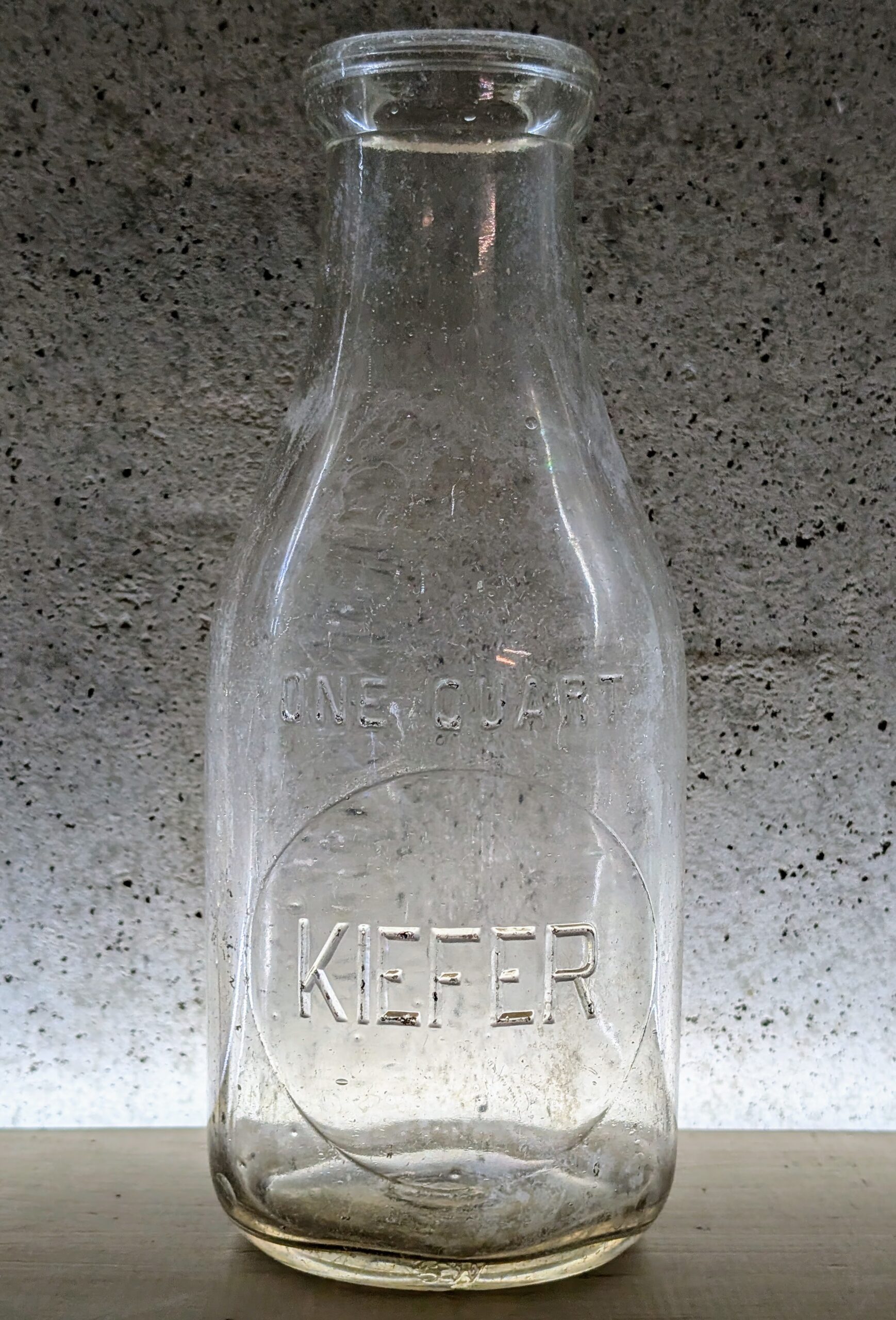
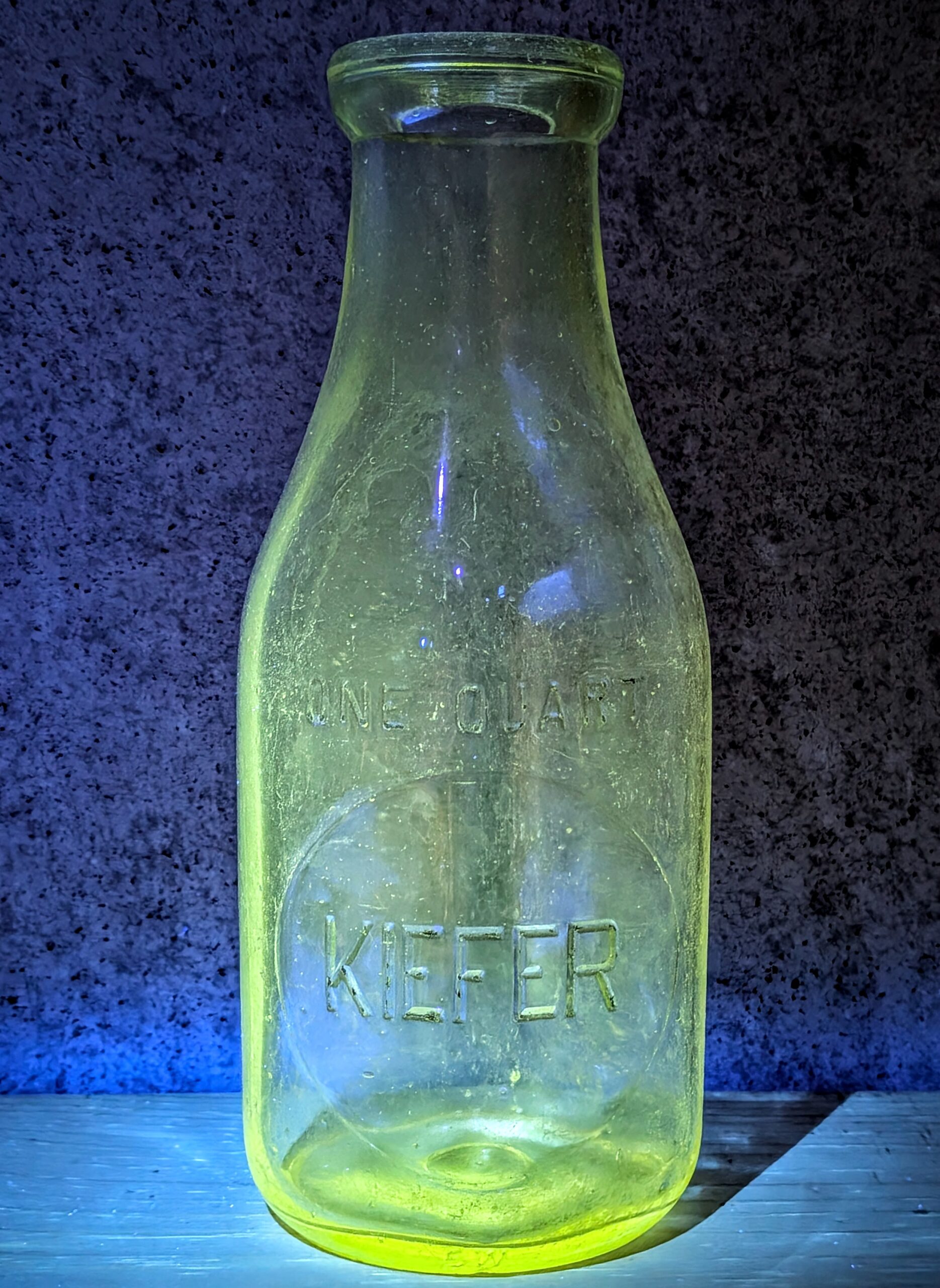
Parties wanting ice cream for home use, picnics, socials, or any kind of gathering can be supplied on short notice with any quantity by leaving their order at George Kiefer’s dairy, one mile west of Bremen.
The Bremen Enquirer – April 27, 1911
R. F. McDuffy, a Chicago detective, came here yesterday and summoned Yoe Kroft, a Chicago man, who had been whitewashing the barns at Kiefer Bros.’ dairy, to appear as a witness in a big damage suit in that city. The two men returned to Chicago together yesterday afternoon.
South Bend News-Times – December 17, 1913
A real estate deal of some note was consummated last week in which Ollie Kiefer, sr., member of the Kiefer Bros’. Springbrook dairy farm, became the possessor of the Valentine Glossman farm on the Ridge. The farm consists of 80 acres of splendid soil. Mr. Kiefer expects to move onto the farm in the early spring.
The Bremen Enquirer – January 28, 1915
At Kiefer Bros. dairy, a mile west of town, the mercury registered 18 below zero. At the water and light plant, usually a cold place, it was 12 below. Up town, where they were better sheltered, thermometers generally showed around 10 below.
The Bremen Enquirer – July 24, 1930
GEORGE M. KIEFER.
George M. Kiefer, well known retired farmer and for many years a leading citizen of this community, died at his home at 321 North Center street at 5:30 this morning after a long illness from a complication of diseases incident to his advanced age. His death came only a few days after that of his brother, Edward.
George Martin Kiefer was born on a farm near Bremen March 10, 1853. He was the son of Jacob and Barbara Kiefer. He spent his entire life of more than seventy-seven years in this community and took an active interest in its civic affairs. He was united in marriage with Caroline Mohr on May 2, 1878. Four sons and one daughter were born to them. One son, William, preceded his father in death. Surviving, with the widow, are three sons, Albert and Henry F. Kiefer of Bremen and Edward Kiefer of South Bend, and one daughter, Mrs. Delbert Snyder of Bremen. He leaves also two brothers, Carl T. Kiefer of Bremen and Frank Kiefer of Berkeley, California. Three brothers and three sisters preceded him in death.
During the past twenty years Mr. Kiefer has been superintendent of the Bremen park. It was largely through his effort that the park was established, and he has always taken an active interest in its upkeep. Much of the beautiful shrubbery there now is of his planting.
Funeral services will be held Sunday afternoon with a brief ceremony at the home at 1:30 o’clock and the service at St. Paul’s Lutheran church at 2:00. Mr. Kiefer was a life-long member of the church. Rev. W. T. Vogel will officiate in the funeral services. Burial will be in the Bremen cemetery.